

Are All Warts Related To The HPV Virus?
All warts, including genital warts, are brought on by HPV family strains. Genital warts are produced by a different strain of the virus than those that affect your hands, feet, or other parts of your body.
Other non-sexually transmitted illnesses, such as plantar and common warts, are also caused by HPV. The same warts that infect your hands and feet do not infect your genitalia. The top layer of skin is infected by general HPV infections, which are typically disseminated through a small scratch and do not result in genital warts.
Warts are spread via contact with an infected person. A common wart infection affects most people at least once in their lifetime.
Types of warts brought on by non-sexual HPV strains
Several different types of warts are brought on by non-sexually transmitted HPV strains, including:
- Flat warts
- Common warts
- Plantar warts
How do HPV warts appear?
Flat warts are slightly elevated bumps that are flat on top and darker than the surrounding skin. These are common in kids and often appear on their faces, especially on the forehead. They may occur on a man’s face where facial hair grows, and on a woman’s legs.
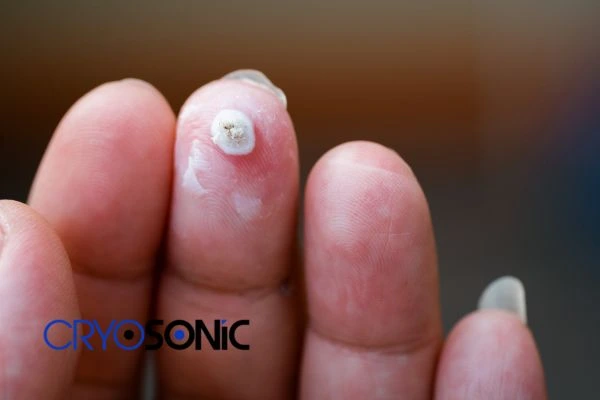
Common warts usually show up as rough, raised bumps on the fingers, hands, or elbows. They can feel a bit uncomfortable and often don’t look very pleasant. In some cases, they may also bleed or get sore if they are rubbed or knocked. These warts are quite contagious and can spread through direct contact with the wart.
Plantar warts, which are rough, hard growths that typically occur on the heels and balls of the feet, can be uncomfortable. Dermatofibroma Removed – All You Need To Know
How are HPV warts spread?
The accelerated cell development in the epidermal layer of the skin is the cause of the spread of warts associated with HPV.
A skin wart, also known as a common wart, is a sign that the person has come into contact with the virus. It is important to remember that the development of a wart following exposure may take months.
Warts can sometimes develop after simple skin contact, for example shaking hands with someone who has a wart on their hands. They can also spread indirectly through everyday items like towels or razors if they’ve recently been used by an infected person.
When a virus or wart comes into contact with skin that has been cut or wounded, it is most common for that person to develop the general HPV virus. This is one of the causes of facial warts in men, which can spread as a result of shaving nicks. Women who shave their legs may also experience irritation in certain areas.
Cryopen
Cryopen is the best treatment for quickly and painlessly removing warts, verrucas, skin tags, milia, cherry angiomas, age spots, and other skin flaws. Amazing skin can be achieved in a matter of seconds with minimal invasiveness and without injections.
Why do you want Cryopen?
The need for it still exists, even though cosmetic procedures such as cherry angiomas, milia, and skin tags can no longer be treated through routine NHS procedures. Without the need for anaesthesia or injections, Cryopen is a simple and quick treatment for some common skin conditions.
Cryopen is useful for whom?
Cryopen is suitable for youngsters because it essentially doesn’t cause any discomfort and doesn’t require any injections. Anyone with skin blemishes may be a candidate for this surgery, although it is always a good idea to consult a skilled practitioner before proceeding.
A lot of people have queries about Cryopen.
What transpires during a treatment?
A small applicator is used to apply liquid nitrogen to the unwanted tissue after being pressed against the skin defect. The skin is then allowed to defrost and revert to its original colour.
Are there any adverse consequences of any kind?
This method is non-invasive and is regarded as having a lower risk. Although the risk of side effects is quite rare, the following few might be identified:
- temporary changes to the treatment site colour scheme.
- Sensational loss that passes quickly.
- soreness at the site of the therapy.
Inform your clinic if you have any questions about any of these concerns.
How much time will it take to recover?
Both the treatment and the recovery period are generally not painful. Depending on the size of the treated area, healing usually takes around 1–6 weeks. The lesion may appear darker as it heals and will typically flake or peel away as new skin forms underneath.
What conditions may CryoPen treat?
Viral warts, skin tags, seborrheic keratosis, actinic keratosis, and other benign lesions can all be treated with the CryoPen. Before treatment, a proper medical diagnosis is required because we can only treat benign lesions. You will be advised to ask your general practitioner for permission to start treatment if a lesion appears suspicious.
Depending on the type of skin lesion, treatment may be applied to the face, torso, or scalp. It is possible to handle many locations in a single session.
How exactly does CryoPen function?
The CryoPen allows our physician to work with millimetre-perfect precision, as it generates a pressurised, incredibly fine jet of nitrous oxide from its end. The targeted cells are destroyed by freezing the intercellular fluid, which forms ice crystals that damage the cell membrane while sparing healthy cells.
Is using a CryoPen for cryotherapy risk-free?
The safety of cryotherapy has long been established, as has the risk of problems, even though using a CryoPen is less risky than using many other treatments and procedures. N2O is directly delivered to the area by Cryopen, sparing the surrounding, healthy cells. The FDA and the CE have both approved Cryopen. Because our team believes it is only secure to be administered by someone who is sufficiently trained, Cryopen treatments at Cryosonic are always administered by one of our highly skilled practitioners or cosmetic nurses.
Does Cryopen therapy cause harm?
With only minor discomfort, it is typically very well tolerated. When the nitrous oxide reaches the sore’s lowest point, it feels like a stinging nettle on the skin, but this sensation swiftly goes away. After treatment, there may be occasional persistent stinging that lasts several minutes.
Following therapy, the skin lesion may become painful, red, and also inflamed. There may also be some blistering, and occasionally a scab may form. If a considerably deeper freeze is required, this may occasionally result in greater discomfort, felt both immediately after the treatment and for a variable period afterwards. This should not be confused with regular cryotherapy, which typically damages healthy cells and can be quite painful.
How soon can I expect to receive results?
Depending on the depth and size of the sore, healing can take anywhere from 1 to 6 weeks after therapy. Lesions typically have a darker colour (due to dead cells), which will slough off as the skin underneath heals.
A follow-up appointment is usually recommended after 4 weeks to evaluate the results of the initial treatment and determine whether any additional applications are required.
What must I do after receiving Cryopen treatment?
When you receive Cryopen therapy at the Facility, you will undoubtedly receive detailed aftercare instructions. There is no actual downtime with Cryopen; frequently, clients schedule this procedure during their lunch break and then go right back to work.
Unless we have specifically advised you to do so, we do not recommend covering the area with clothing or plaster. Healing will often take between one and six weeks to complete. We kindly urge that you schedule a visit with us as soon as possible for a review if you have any concerns that the wound may be infected (growing redness or discomfort, yellow discharge, or pus).
What may I anticipate following treatment?
In the days that follow, a scab will often form, and the lesion may become slightly red and unappealing. While it is possible to develop a small area of scarring or a change in skin colour, this typically resolves over 1-6 weeks, and the remaining area will normally return to normal. It’s crucial to avoid picking at the scab because doing so could leave scars.
To verify that the desired outcome has been obtained, we offer a 4-week follow-up appointment. If considered required, a further top-up can be performed at this follow-up consultation.
Following the recommended course of treatment, it is common to suffer repeated pain that can persist for around an hour. Following this, the area will frequently become slightly red, painful, and inflamed, and a sore may form. The wound may cause some sobbing, and the scab may also cry. Avoid picking at the wound because doing so could leave scars.
The skin sore will become drier, turn darker, and eventually peel off in 1 to 2 weeks as the wound heals. It is vital to avoid picking at the wound, as this will delay healing. Leg sores typically take a little longer to heal than other sores. If more treatment is required, it will be applied at a follow-up consultation.
How frequently will I need treatment?
The effects of CryoPen therapy are long-lasting; it may require more than one application to completely eradicate the sore. After 2-4 weeks, a follow-up examination is advised to see how the initial therapy has fared and whether additional application is necessary.

Will the CryoPen procedure work for me?
Clients frequently have a lot of questions and concerns before starting CryoPen treatment for the first time. Knowing everything there is to know about the removal of skin lesions will help ensure that you are happy with the results of your therapy. This will be carried out during your optional, cost-free exam. You will be given information on what the treatment comprises and have your suitability for treatment assessed. We may advise you against treatment if we believe this is in your best interests. We always make sure that you receive an honest analysis that takes your demands into account.
Who should not receive CryoPen treatment?
CryoPen treatment is not advised for women who are pregnant or breastfeeding, or for individuals with autoimmune conditions or cold sensitivity. It is also unsuitable for those prone to keloid scarring.
Is this medical care covered by the NHS?
As it is considered cosmetic surgery, the removal of skin tags, milia, and cherry angiomas is no longer routinely treatable as an NHS procedure. You can now receive this treatment at Cryosonic thanks to the CryoPen.
Can I get CryoPen treatment if my skin is darker?
If you have a darker skin tone, it is recommended to use repeated short freezing cycles. This means you may require extra sessions, spaced a few weeks apart, to fully remove the lesion.
Can children receive CryoPen treatment?
Yes, the reduced pain allows us to frequently treat younger individuals without causing them any discomfort. Before your child receives therapy, you will undoubtedly be asked to fill out an adult approval form.

FAQs for “Are All Warts Related to HPV?”
Are all warts caused by HPV?
Yes, every type of wart—whether it appears on the hands, feet, body, or the intimate area—comes from the human papillomavirus (HPV). The difference lies in the strain. Non-sexual strains cause common, flat, and plantar warts, while completely separate strains cause genital warts. This means a wart on your hand cannot turn into a genital wart.
If all warts are HPV, why do they look so different
Warts appear differently depending on the HPV strain and where on the body the virus enters the skin. For example, plantar warts look hard and deep because they form under pressure on the feet, while flat warts stay small and smooth because the strain involved grows closer to the surface of the skin.
How long after catching HPV does a wart show up?
A wart can take months to appear. Many people don’t realise they’ve even come into contact with HPV until a bump starts to grow. The virus stays hidden in the upper layer of the skin until it triggers rapid cell growth, which eventually becomes visible as a wart.
Can warts spread through everyday contact?
Yes, warts spread easily through skin-to-skin contact or by touching objects recently used by someone with a wart. Towels, razors, gym equipment, and even shaking hands can pass the virus if the skin has a small cut or scratch that allows HPV to enter.
For Further Information, Please Call Us: 03300 100 392