
Dark spots on the skin are something almost everyone deals with at some point. They can appear after acne, sun exposure, hormonal changes, or minor skin injuries. Because they’re so common, people often look for simple home remedies first — and one of the most talked-about options is apple cider vinegar (ACV).
But the real question is—how long does apple cider vinegar actually take to fade dark spots, and does it really work? And just as importantly, when could professional treatments like CryoPen be a better choice?

What Apple Cider Vinegar Is Thought to Do for Skin
ACP contains acetic acid, which is mildly exfoliating. In theory, this means it may help:
- Loosen dead skin cells.
- Slightly brighten uneven pigmentation.
- Improve overall skin texture over time.
Because of this, it has become a popular DIY option for people trying to fade mild dark spots or post-acne marks.
However, it’s important to understand that ACV is not a medically controlled skin treatment. Its effects can vary widely depending on skin type, spot depth, and consistency of use. Are all warts related to HPV?
So, How Long Does Apple Cider Vinegar Take to Lighten Dark Spots?
Here’s what the timeline typically looks like:
- 1–2 weeks: Your skin may feel a little smoother, but you probably won’t see any visible fading yet.
- 3–6 weeks: You might notice very slight brightening in lighter surface spots.
- 6–12 weeks: Some people see a small improvement in newer or faint marks.
- 3+ months: Results usually stop improving, especially for deeper pigmentation.
Overall, ACV works slowly and its results can be quite limited. It may only have a mild effect on surface-level discolouration and doesn’t really target deeper or stubborn pigmentation in a precise way.
Why Apple Cider Vinegar Doesn’t Work for Everyone
Dark spots are not all the same. Some sit on the surface, while others go deeper into the skin.
ACV struggles because:
- It cannot control how deeply it penetrates the skin.
- It may irritate sensitive skin, making pigmentation worse.
- It is not designed to target specific pigment cells.
- Results depend heavily on skin tolerance rather than predictable action.
In some cases, people even experience redness or dryness, which can temporarily make skin tone look more uneven. Warts- Can Using Corn Caps Treat Them
Safe Use (If You’re Trying It at Home)
If someone still wants to try apple cider vinegar, it should never be applied directly to the skin.
A safer way to use it is:
- Always dilute it with water (usually 1:2 or stronger)
- Do a patch test first
- Use it only for a short time on the skin
- Avoid broken or sensitive areas
- Stop right away if it causes any irritation
Even when used carefully, it is still not a guaranteed treatment for pigmentation.
A More Advanced Option: CryoPen Treatment
For certain types of dark spots and skin lesions, professional treatments can deliver much faster and more controlled results. Moles- Is Cryopen Cryotherapy A Success In Treating Them
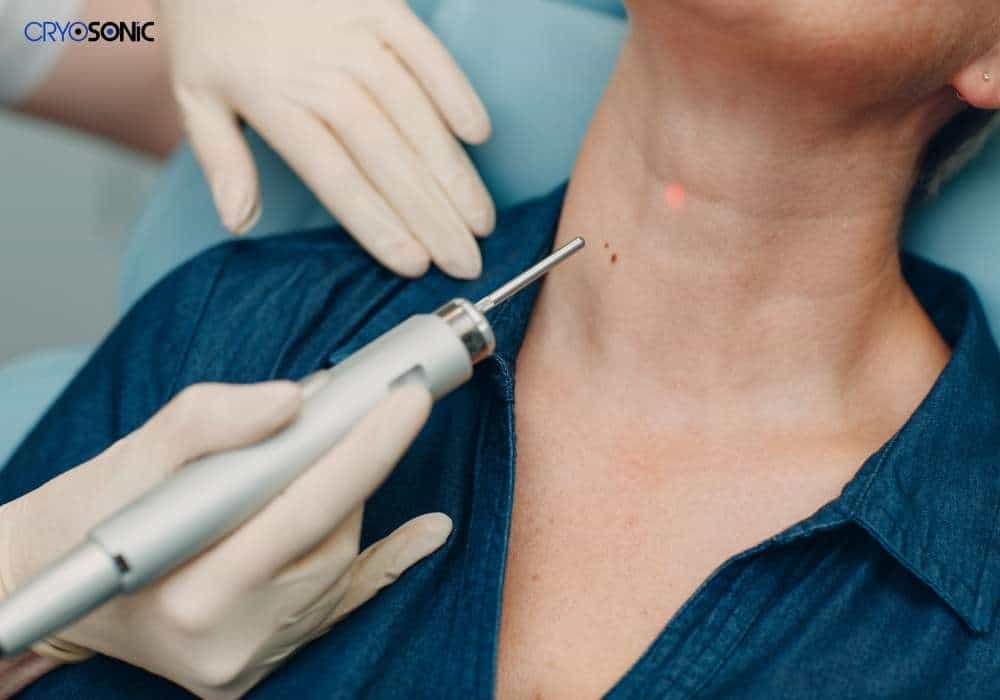
One option we offer is CryoPen treatment, which uses precise cryotherapy to target unwanted skin cells.
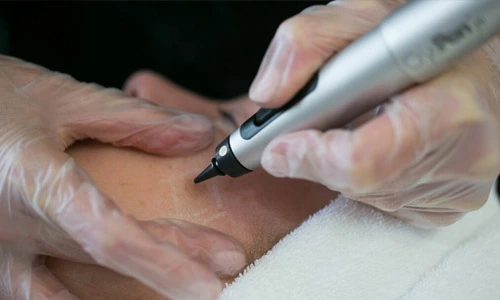
CryoPen works by delivering a highly controlled jet of cold to the targeted area. This freezes the abnormal skin cells without affecting the surrounding healthy tissue.
It is commonly used for:
- Sun spots (solar lentigines)
- Age-related pigmentation spots
- Small benign skin lesions
- Certain raised or stubborn skin marks
How CryoPen Differs from Apple Cider Vinegar
The biggest difference is precision and speed.
Apple Cider Vinegar:
- Works slowly over time (and may not work for everyone)
- Depends on how your skin reacts
- Not medically targeted
- Results can differ from person to person
CryoPen:
- Targets specific pigmentation directly
- Controlled professional application
- Typically, faster visible improvement
- Suitable for more persistent or stubborn spots
While ACV is more of a general skincare trend, CryoPen is a structured clinical treatment used in professional settings. Cryopen Treatment is FDA Approved
Which Option Is Right for You?
Choosing between apple cider vinegar and CryoPen depends on what you’re dealing with:
ACV may be considered for:
- Very mild surface dullness
- Early or faint pigmentation
- People experimenting with natural skincare (with caution)
CryoPen is more suitable for:
- Noticeable or stubborn dark spots
- Sun damage pigmentation
- Spots that have not responded to skincare products
- Faster, targeted cosmetic improvement
Final Thoughts
Apple cider vinegar is often talked about as a natural solution for dark spots, but the reality is more modest. If it helps at all, it usually takes weeks to months, and results are often subtle. Dermatofibroma Removed – All You Need To Know
For more persistent pigmentation or clearly visible dark spots, professional treatments like CryoPen offer a more direct and controlled approach, especially when performed in a clinical setting.
If you’re unsure what type of pigmentation you have, it’s always better to get it assessed before trying multiple home remedies that may or may not work for your skin type.
FAQs for Dark Spot Removal
Q: How long does apple cider vinegar take to lighten dark spots?
Apple cider vinegar works quite slowly, and in many cases, the difference is very subtle or hard to notice. Since pigmentation can sit deeper in the skin, gentle remedies like vinegar may take several months to show slight fading, and in some cases, stubborn marks may not fade completely. Many people eventually look for professional treatments when they see the results are quite limited.
Q: Can CryoPen™ remove dark spots faster than home remedies?
CryoPen™, whilst typical cryotherapy works faster, treating the dark spot with targeted freezing of unwanted cells. Things such as vinegar or creams take even more time and also do not reveal much change, based on studies. But for those of you with CryoPen™, many find the area begins to fade within two weeks because the skin heals and this is partly a renewal process.
Q: Can kids use the CryoPen to cure dark spots?
Yes, we have a lot of experience working with younger clients. You will need to sign an adult approval form before your child receives treatment, and we’ll make sure they’re at ease and informed of what’s going to happen throughout the appointment.
Q: Is it safe for children to have dark spots treated with CryoPen™?
Yes, children can be treated, and Cryosonic has extensive experience making younger clients feel comfortable. A consent form from a parent or guardian is required, and the practitioner walks the child through what to expect calmly and reassuringly.
Q: Will CryoPen™ leave a mark after treating a dark spot?
The skin may look a little lighter or slightly pink while it heals, but this usually settles as new skin develops. CryoPen™ works by only targeting the pigmented area, helping the skin return to a smooth, natural appearance once it has fully healed.
Q: Who should not be treated for dark spots with a CryoPen?
Individuals with autoimmune illnesses or cold sensitivity should not get CryoPen treatment, nor should pregnant or nursing women. Additionally, it is not advised for those who struggle with keloid scarring. Just how do you eliminate cherry angiomas?
For Further Information, Please Call Us: 03300 100 392