
Actinic keratoses (AK), often called solar keratoses, are rough, scaly patches that tend to show up after years of sun exposure (they can be as small as a pinhead or grow to about the size of a quarter). If they’re left untreated, there’s a chance they can develop into skin cancer over time.
So, how best to treat them?
Several other treatments can be beneficial, including topical creams, photodynamic therapy, and cryotherapy. But we believe one of the quickest and best solutions is with cryotherapy at Cryosonic.
It’s fast, there are no stitches or incisions, and you can target the specific damaged skin cells. And most crucial, it staves off AK from growing into something worse.
Do My Dry, Scaly Patches Mean I Have Actinic Keratoses, and What Should I Do Next?
Not all patches of dryness or crustiness are cause for a doctor visit, but if you’ve developed patches on your face, scalp, ears, or the backs of your hands that are both stubborn and rough, or that hurt when you touch them, you may have actinic keratoses.
They usually start small and are felt more than seen. Our Treatments are safe for children.
Get your foot in the door and go for an assessment. At Cryosonic (where our team can evaluate your skin and see if you’ve got AK, or something else).
Assuming it is AK, early detection means treatment is usually simple and effective.

Is cryotherapy used for the Most Effective Treatment of Actinic Keratosis?
Cryotherapy is the first-line treatment for actinic keratosis. That’s a procedure that treats the lesion by freezing it with liquid nitrogen, after which the abnormal cells die and are cleared by your body. This is a conservative treatment and may be very effective — if the lesion is small and circumscribed.
Cryosonic, we have helped so many with cryotherapy, and most discover that the benefits are real even after one session! Fast, affordable (sort of — sometimes the cost is as varied as the individuals walking through the door) and with little to no downtime, it’s the go-to for anyone looking for that fast, breezy fix.
What Are the Earliest Signs of Actinic Keratoses —And When Do You Need to Seek Treatment?
Those early signs of actinic keratoses are neglected. They are typically dry, scaly patches of skin, sometimes hit by the sun. They can sometimes feel rough and may be pink, red or flesh-coloured.
You should make an appointment to see a specialist if:
- Your dry, cracked cuticles that just won’t quit
- Slightly raised or crusty spots
- inflammation and pain or itching of the skin.
Early diagnosis is the key. At Cryosonic, we keep after our patients, so they see us when things don’t feel right and get them in for a skin check. The better we treat it, and the earlier we treat it, the better the outcome

How Does Cryotherapy Compare to Other Treatments ?
A range of treatment options are available for actinic keratosis. Topical creams, such as fluorouracil or imiquimod, can also be effective, especially for larger areas.
Photodynamic therapy involves applying a photosensitizer to the skin, then exposing it to light, which kills abnormal cells. And though they get the job done, both those methods can take a while and cause side effects such as redness or irritation. See Here Cryopen the Safest Mole Removal Treatment
With cryotherapy, however, it is a bit quicker. It is targeted at individual lesions and typically requires fewer visits to us.
The abnormal cells are eliminated by freezing, causing minimal impact to the surrounding healthy skin. For many of its clients at Cryosonic, it remains a happy trifecta of convenience, efficiency, and outcome.
Will early cryotherapy treatment for AKs reduce the risk of skin cancer?
Yes, early use of cryotherapy decreases the likelihood of your actinic keratoses turning into squamous cell carcinoma (skin cancer). Not all AKs become cancer, but it is impossible to predict which ones will. One reason early intervention is so critical.
So, when you treat the AKs with cryotherapy early, you’re removing these cells that are already damaged before they are able to transform. At Cryosonic, we focus not only on treating what you have, but also on educating & caring for your skin in the future.
What can I expect before and during Cryotherapy treatment for my Actinic Keratosis at Cryosonic?
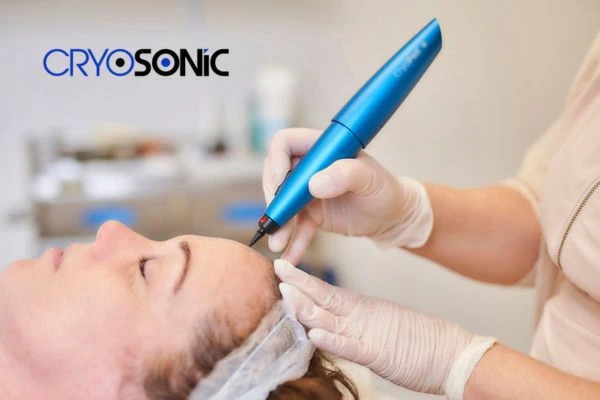
We are treating with focal liquid nitrogen. It’s cold — a bit like sticking an ice cube on your skin — and might sting a bit, but the entire process takes only a couple of minutes. Check out Here What takes place after CryoPen?
You might have redness, swelling or blistering where the lesion was treated. This is very normal and will mostly clear in a week or two. Then your treated area will scab over before shedding the damaged skin, revealing a younger layer beneath.
We will provide you with straightforward aftercare advice, and our team is available to answer any questions that you have after your treatment.
Who Is a Candidate for Cryotherapy for Actinic Keratosis ?
Cryotherapy is appropriate for patients with one or a few visible actinic keratosis. It’s especially suitable for:
- People with rough, scaly patches on sun-exposed skin
- Those diagnosed with early-stage Actinic Keratosis
- Anyone wanting a quick, non-surgical treatment
- Individuals with a small number of lesions
- People whose skin heals normally
- Those looking to treat spots early and prevent progression
But if you have a lot of lesions or very sensitive skin, we may consider some other options.”
At Cryosonic, we evaluate everything to see your best solution. We care about your skin, and we would like to help guide you toward being in charge of it.
FAQs – Best Treatment for Actinic Keratoses
What’s the most effective treatment for actinic keratoses?
Cryotherapy is widely considered one of the most effective ways to treat individual actinic keratoses. The freezing destroys the damaged cells quickly, and the area heals naturally over the next week or two. Many people prefer it because it’s fast and doesn’t involve stitches or long recovery periods.
How can I tell if my dry or rough patches are actually actinic keratoses?
Actinic keratoses often feel rough before they are clearly visible. If the patches sit on sun-exposed areas like the face, scalp, or hands and don’t go away, they’re worth having assessed. An evaluation helps confirm whether the patches are AKs or something similar that also needs attention.
Why is cryotherapy used so often for treating actinic keratoses?
Cryotherapy works quickly and accurately, especially for small or early AKs. It targets only the abnormal cells while leaving healthy skin untouched. Many people value that cryotherapy freezes the affected area in just seconds, and the treated skin usually heals with minimal irritation, according to recent medical reviews.
What are the earliest signs that I might have actinic keratoses?
Early AKs tend to be small, dry, and rough to the touch, often feeling like sandpaper. They may be pink, red, or skin-coloured, and can become sensitive if rubbed. Even mild irritation or persistent scaly patches on sun-exposed areas should be checked so treatment can begin early.
For Further Information, Please Call Us: 03300 100 392